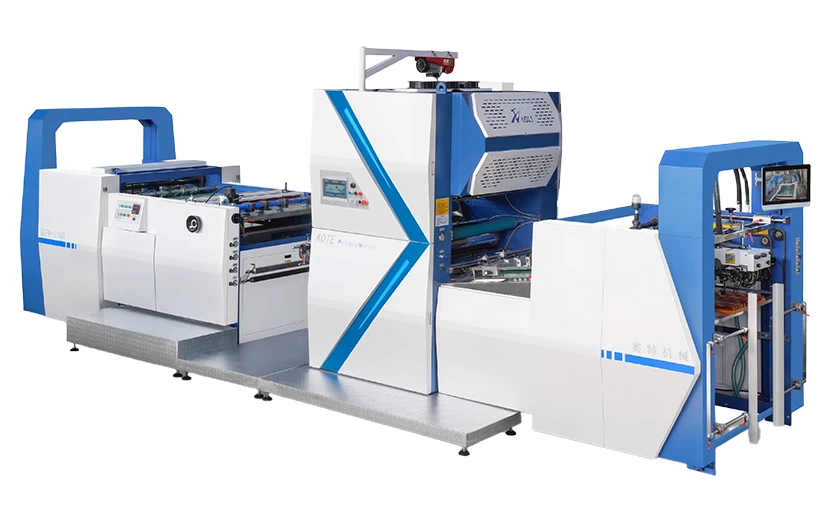
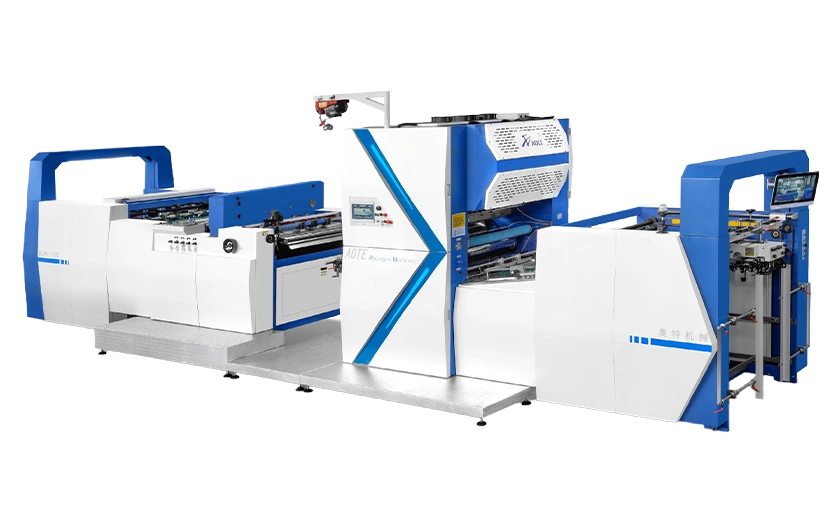
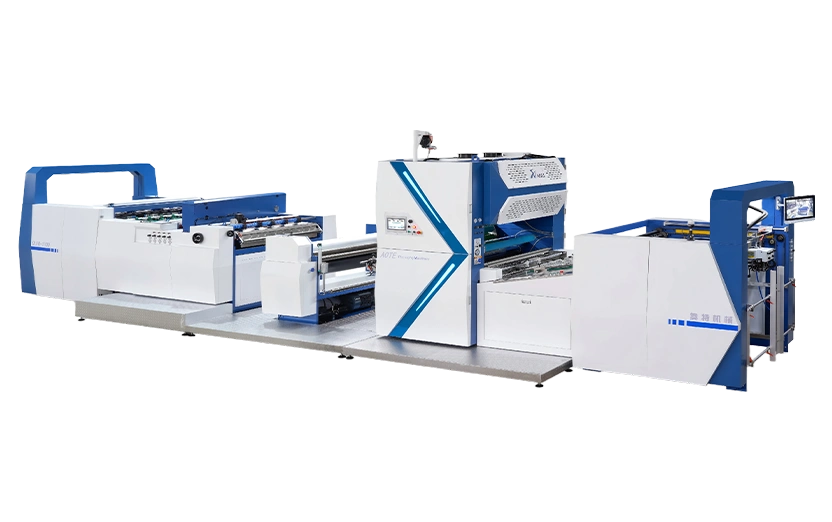
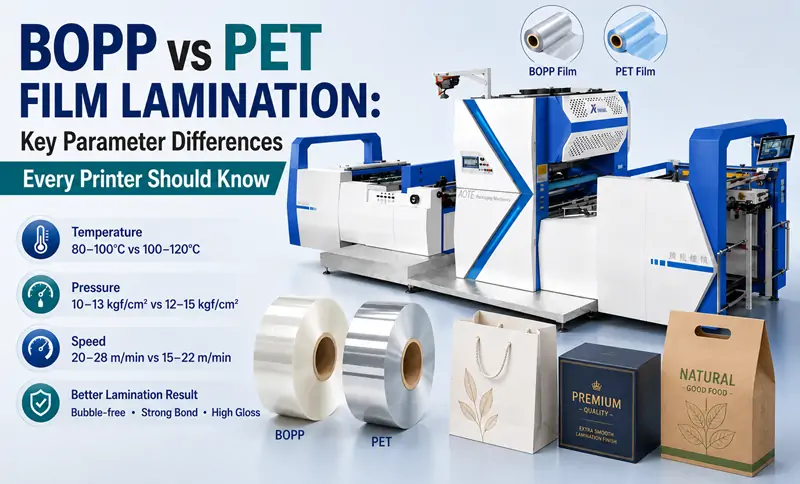
Not all films laminate the same way. BOPP and PET, the two most common lamination film base materials, require different temperature, pressure, and speed settings to achieve a clean, bubble-free result. The key differences come down to each material's thermal conductivity, thickness, and surface characteristics. Metalized films are not a separate base material category — they are BOPP or PET films with a thin aluminum coating applied (with PET being a widely used substrate for metalized films in many applications), and their lamination parameters are determined by their base substrate while requiring additional care for the coating layer. If you're running a vertical laminating machine that handles multiple film types, understanding these differences is essential to avoid waste and rework.
This article breaks down the critical parameters for BOPP and PET base films, explains how metalized coatings affect the process, and provides a practical reference for production planning.
Why Base Film Type Matters in Lamination
The lamination process relies on heat, pressure, and time to bond a film layer to a paper or board substrate. Different base films respond differently to these three variables:
- Thermal conductivity affects how quickly heat transfers through the film to activate the adhesive.
- Film thickness influences how much heat and pressure are required for full adhesion.
- Surface energy determines how well the adhesive wets out and bonds to the film.
Using the same settings for PET film that you use for BOPP film is a common cause of edge delamination, bubbles, or poor gloss. Adjusting parameters by base material type is not optional — it's a production necessity.
Understanding Metalized Films: Coating vs. Base Substrate
Metalized films (such as metalized BOPP or metalized PET) have a thin aluminum coating deposited on the film surface. PET and BOPP are the two primary base materials used for metalized films. This coating creates a reflective, premium appearance but introduces additional considerations:
- The base substrate (BOPP or PET) determines the core temperature, pressure, and speed requirements.
- The aluminum coating adds sensitivity to pressure, roller condition, and heat consistency.
Therefore, when laminating a metalized film, you should start with the parameter ranges for its base substrate (BOPP or PET), then apply additional precautions to protect the coating.
| Metalized Film Type |
Base Substrate |
Parameter Reference |
Common Applications |
| Metalized PET |
PET |
Use PET ranges, with coating precautions |
Premium packaging, food & beverage packaging |
| Metalized BOPP |
BOPP |
Use BOPP ranges, with coating precautions |
Snack foods, confectionery, dry goods packaging |
PET and BOPP are the two major base material types for metalized films. The choice between them depends on the specific application — metalized PET is typically used for premium packaging requiring higher stiffness and dimensional stability, while metalized BOPP is commonly used for cost-sensitive snack food and dry goods packaging.
BOPP Film Lamination: Parameters and Considerations
BOPP (biaxially oriented polypropylene) is one of the most common lamination film base materials. It's available in glossy and matte finishes and works well with most adhesives.
Recommended parameter ranges for BOPP (including metalized BOPP):
| Parameter |
Typical Range |
Notes |
| Lamination temperature |
80–100°C |
Lower end for thin films, higher for thicker grades |
| Pressure |
10–13 kgf/cm² |
Adjust based on paper thickness |
| Speed |
20–28 m/min |
Slower for heavier paper stocks |
| Film thickness |
15–25 μm |
Standard range for most applications |
Key considerations for BOPP:
- BOPP has relatively good thermal conductivity, so heat transfer is efficient.
- The film stretches slightly under heat — tension control must be monitored to prevent wrinkling.
- Matte BOPP may require slightly higher temperature than glossy BOPP due to its surface texture.
Additional considerations for metalized BOPP:
- The aluminum coating is fragile — excessive pressure or roller imperfections can scratch or dull the reflective surface.
- Heat must be carefully controlled; overheating can cause the coating to crack or discolour.
- Metalized films are less forgiving of dust or debris on the roller surface.
PET Film Lamination: Higher Temperature Required
PET (polyester) film is stronger, more heat-resistant, and more dimensionally stable than BOPP. It's another primary base material for lamination films, and is widely used as a substrate for metalized films in many applications. PET is often used for premium packaging, labels, and applications requiring higher durability. However, its lower thermal conductivity means it requires more heat to achieve the same adhesive activation.
Recommended parameter ranges for PET (including metalized PET):
| Parameter |
Typical Range |
Notes |
| Lamination temperature |
100–120°C |
Higher than BOPP due to lower thermal conductivity |
| Pressure |
12–15 kgf/cm² |
Slightly higher to compensate for film stiffness |
| Speed |
15–22 m/min |
Slower than BOPP for adequate heat exposure |
| Film thickness |
12–50 μm |
Varies widely by application |
Key considerations for PET:
- PET's higher melting point (approx. 260°C) allows higher operating temperatures without risking film degradation.
- The film's stiffness requires careful feeding to avoid jams.
- Edge delamination is more common with PET if temperature is insufficient — watch for peeling at sheet edges.
Additional considerations for metalized PET:
- The metal coating on PET is similarly sensitive to scratches and dulling — verify roller condition before each run.
- Metalized PET may require slightly more careful temperature control than metalized BOPP due to PET's higher baseline temperature range.
- According to AOLI's case study, a Brazilian packaging company successfully laminates glossy/matte BOPP, PET, and metalized films on cardboard using a vertical laminating machine, with sheet sizes up to 720×1020mm and weights from 115–350gsm.
Side-by-Side Parameter Comparison: BOPP vs. PET
| Parameter |
BOPP (Standard & Metalized) |
PET (Standard & Metalized) |
| Temperature range |
80–100°C |
100–120°C |
| Pressure range |
10–13 kgf/cm² |
12–15 kgf/cm² |
| Recommended speed |
20–28 m/min |
15–22 m/min |
| Primary risk (standard film) |
Wrinkling |
Edge delamination |
| Additional risk (metalized) |
Coating scratches/dulling |
Coating scratches/dulling |
| Heat sensitivity |
Moderate |
Low (high melt point) |
Common Problems by Film Type
BOPP (including metalized BOPP):
- Wrinkling — usually caused by uneven tension or incorrect roller pressure.
- Bubbles — often from insufficient temperature or moisture in the paper.
- Scratches or dull spots (metalized only) — check roller condition and pressure distribution.
- Coating cracking (metalized only) — reduce temperature if cracking appears along fold lines.
PET (including metalized PET):
- Edge delamination — the most common issue; increase temperature or pressure at edges.
- Poor gloss — may indicate insufficient heat for the adhesive to flow properly.
- Scratches or dull spots (metalized only) — verify roller surface and pressure settings.
- Coating cracking (metalized only) — monitor temperature closely, especially at higher PET temperature ranges.
Pre-Production Checklist for Multi-Film Lamination
Before running a job with a new film type, verify the following items:
- Confirm the base film type (BOPP or PET) and thickness with your supplier.
- If using metalized film, confirm the base substrate and check for additional coating precautions.
- Adjust the temperature setting to the recommended range for that base substrate.
- Verify the pressure setting by testing on a sample sheet first.
- Match the speed to the base substrate's heat exposure requirements.
- Inspect roller condition — ensure it is clean, smooth, and free of residue.
- Set tension controls appropriately for the film's stiffness.
- Confirm the adhesive type is compatible with the film.
- For metalized films, run an extra sample check specifically for coating integrity after lamination.
When to Seek Technical Confirmation
The parameter ranges provided above are general starting points. Actual optimal settings depend on:
- The specific film brand and grade (including whether it is metalized and on which base substrate).
- The paper or board substrate being laminated.
- The adhesive system being used (water-based, oil-based, or thermal/pre-coated).
- The laminating machine's specific heating and pressure characteristics.
For production-critical jobs, always run sample tests and adjust parameters accordingly. If you're working with a new film type or an unfamiliar substrate, consider consulting the equipment supplier for configuration recommendations. AOLI's services team offers technical support and can help verify settings for your specific application.
Frequently Asked Questions
Can I use the same lamination settings for glossy and matte BOPP?
Not always. Matte BOPP has a textured surface that may require slightly higher temperature or pressure to achieve full adhesion. Test a sample before running a full production batch.
Is metalized film a separate film type from BOPP and PET?
No. Metalized film is BOPP or PET film with a thin aluminum coating. PET is a widely used substrate for metalized films across many packaging applications. The base substrate determines the core temperature, pressure, and speed settings, while the coating requires additional care for pressure and roller condition.
Why does my PET film keep delaminating at the edges?
Edge delamination in PET is typically caused by insufficient heat at the sheet edges. Try increasing the temperature by 5–10°C or slowing the speed slightly to allow more heat exposure.
What additional precautions are needed for metalized film lamination?
Metalized films require the same temperature and pressure settings as their base substrate (BOPP or PET), but with extra attention to roller condition, even pressure distribution, and precise temperature control to avoid scratching, dulling, or cracking the aluminum coating.
What's the most common mistake when switching between film types?
Forgetting to adjust temperature and pressure settings is the most frequent error. Many operators assume one setting fits all films, which leads to poor adhesion or surface defects. Always refer to a parameter reference table before changing films.
Where can I find more information about AOLI's laminating solutions for specialty films?
You can browse the full product range or contact the team directly for application-specific advice.
Conclusion
BOPP and PET are the two primary base materials for lamination films, with distinctly different temperature, pressure, and speed requirements. Metalized films are not a separate category — they are BOPP or PET films with an aluminum coating (with PET being a widely used substrate for metalized films), and their parameters are determined by the base substrate while requiring additional care for coating integrity. The most critical takeaway is that temperature and pressure must be adjusted per base material — using a single profile for all films will lead to rejects. Always start with the recommended ranges for the base substrate, run sample tests, and fine-tune based on your substrate and adhesive. For challenging applications, don't hesitate to reach out to the equipment manufacturer for technical verification. A well-planned setup reduces waste, improves output quality, and extends the life of your laminating equipment.
For a complete overview of available laminating machine configurations, visit the products overview page. If you have specific questions about your film and substrate combination, the contact page provides direct access to technical support.
Disclaimer: The temperature, pressure, and speed values provided in this article are general industry reference ranges based on publicly available material science and printing industry knowledge. They are not performance guarantees or exclusive data from AOLI. Actual optimal settings depend on the specific film brand, substrate type, adhesive system, and equipment configuration. Always run sample tests before full production. For AOLI-specific product specifications, certifications, service commitments, and customer case details, please refer to the official AOLI website.

 Aug 07,2026