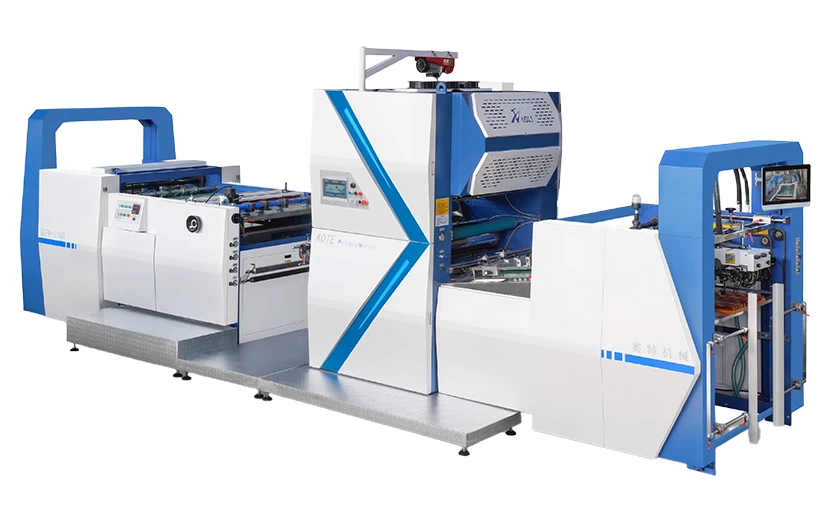
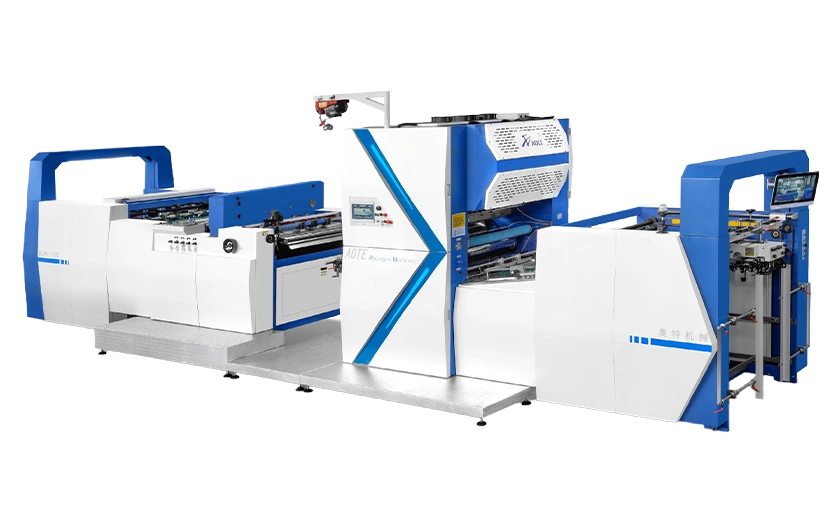
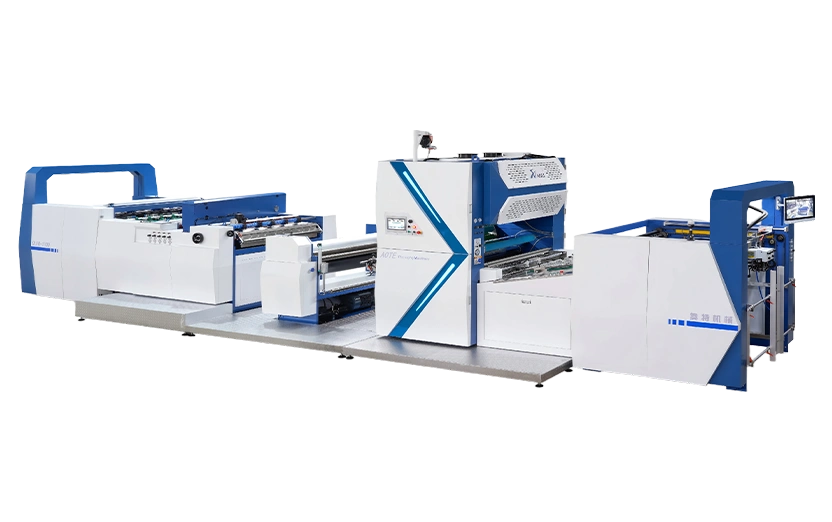
A laminating machine transforms a printed sheet and a roll of plastic film into a single, durable, laminated product. But what actually happens inside the machine? The process follows a consistent sequence of steps, regardless of whether the machine uses thermal or water-based technology.
At its core, the lamination process combines film + substrate + adhesive (or heat) + pressure to create a bonded finished product. Understanding each step helps operators troubleshoot issues, optimize settings, and achieve consistent quality.
For a complete overview of laminating machine types and selection, refer to the complete guide to laminating machines.
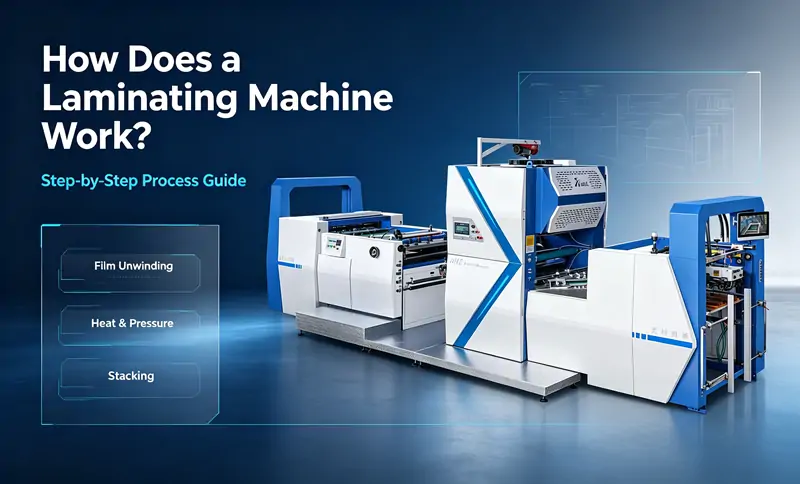
The Six Steps of the Lamination Process
Step 1: Film Unwinding
The laminating film is loaded onto the machine's unwinding shaft. The film may be pre-coated with adhesive (thermal film) or require adhesive application during the process (water-based or oil-based).
Tension control is critical at this stage. Too much tension stretches the film and causes wrinkling. Too little tension allows the film to wander off course. Modern laminating machines use automatic tension control systems to maintain consistent film feed throughout the run.
For AOLI's vertical laminating machines, the film unwinding system supports various film widths and core diameters, with adjustable tension settings for different film types.
Step 2: Sheet Feeding
Paper or cardboard sheets are fed into the machine. In semi-automatic machines, an operator places each sheet onto the feeding table. In fully automatic machines, sheets are fed from a stack through an automatic feeder.
Feeding accuracy is essential. Misaligned sheets result in wasted material and require operator intervention to clear jams. Automatic feeding systems use suction and air blast technology to separate sheets and feed them one by one with precise registration.
AOLI's automatic laminating machines handle sheet sizes up to 1080×1000 mm, paper weights from 100–500 gsm, and speeds up to 100 m/min.
Step 3: Adhesive Application
For water-based and oil-based laminating systems, this step applies adhesive to either the film or the paper surface. A glue coating unit spreads adhesive evenly across the web, ensuring complete coverage without excess that could cause oozing at the edges.
This step is skipped in thermal laminating machines, where the adhesive is already applied to the film during manufacturing. Thermal lamination therefore requires no glue mixing, no glue cleaning, and no drying time—making it a cleaner, simpler process.
Step 4: Lamination – Bonding the Film and Paper
This is the heart of the laminating process. The film and paper are brought together under a roller system where heat and pressure are applied.
For thermal lamination, heated rollers activate the adhesive on the film. The heat softens the film and adhesive, allowing them to bond to the paper surface. The temperature must be precisely controlled to match the film type—BOPP typically at 80–100°C, PET at 100–120°C.
For waterbased cold lamination, the adhesive is applied at room temperature, and pressure alone bonds the layers. This saves energy and prevents heat-related issues with sensitive materials.
Pressure is equally important. Even pressure across the entire sheet area ensures complete contact between the film and substrate, eliminating air bubbles and edge delamination.
AOLI's laminating machines feature electromagnetic heating with ±1°C temperature control accuracy, reaching working temperature quickly for efficient production.
Step 5: Cutting/Slitting
After the film is bonded to the paper, the continuous film between sheets must be cut. The cutting system used depends on the film type:
- Disc cutter – For BOPP and OPP films
- Chain knife or hot knife – For PET, PVC, metalized films, and specialty materials
The chain knife solved the previous problem that PET and metalized films could only be cut manually, significantly improving efficiency for special film applications. Hot knife cutting provides clean cuts without burrs on heat-sensitive specialty materials.
Step 6: Stacking
The finished, laminated sheets are collected and stacked. In automatic machines, an automatic stacker organizes sheets neatly for collection without operator intervention.
Key features to look for in a stacking system include non-stop stacking (allowing sheet removal without stopping production), stack alignment (ensuring sheets are stacked squarely for downstream processing), and sheet counting (providing accurate production counts).
AOLI's automatic laminating machines feature non-stop stacking that supports stable production without interrupting the lamination process.
The Critical Role of Heat and Pressure
Temperature and pressure are the two most critical variables in the laminating process.
Heat activates the adhesive in thermal film and softens the film to conform to the paper surface. Different films require different temperatures because each material has unique thermal properties. BOPP laminates at 80–100°C, while PET requires 100–120°C due to its lower thermal conductivity and higher melting point.
Pressure ensures the film makes complete contact with the substrate. Even pressure distribution eliminates air bubbles and prevents edge delamination. Insufficient pressure results in poor adhesion and peeling. Excessive pressure can crush paper fibres or damage the film.
AOLI's laminating machines use electromagnetic heating with ±1°C accuracy, ensuring consistent temperature control throughout the run. This technology replaced oil heating starting in 2018, with internal electromagnetic heating gradually replacing external electromagnetic heating from 2022.
Thermal vs. Water-Based: How the Process Differs
| Aspect |
Thermal Lamination |
Water-Based Cold Lamination |
| Adhesive |
Pre-applied to film |
Applied during process |
| Heat required |
Yes |
No |
| Glue mixing |
No |
Yes |
| Drying time |
None |
Required |
| Energy consumption |
Higher |
Lower |
| Process complexity |
Simple |
More steps |
Frequently Asked Questions
Why does temperature control matter in lamination?
Temperature affects adhesive activation and film behaviour. Too low, and the adhesive won't bond properly. Too high, and the film may stretch, wrinkle, or degrade. Precise ±1°C control ensures consistent results.
What happens if pressure is too high or too low?
Insufficient pressure causes poor adhesion and air bubbles. Excessive pressure can crush paper, stretch film, or cause edge cracking. Pressure should be adjusted based on paper thickness and film type.
Why do different films require different temperatures?
Each film type has unique thermal properties. PET has lower thermal conductivity and a higher melting point than BOPP, requiring more heat to activate the adhesive and achieve proper bonding.
How long does it take to reach operating temperature?
AOLI's electromagnetic heating reaches working temperature in approximately 3 minutes, compared to significantly longer warm-up times for traditional oil heating systems.
Can the same machine handle both thermal and water-based lamination?
Yes. AOLI's vertical laminating machines are compatible with water-based adhesives, oil-based adhesives, and pre-coated (thermal) films in a single machine—saving up to 40% on equipment investment.
Conclusion
The laminating process follows a clear sequence: film unwinding, sheet feeding, adhesive application (if needed), lamination under heat and pressure, cutting, and stacking. Each step plays a vital role in producing a quality laminated product. Understanding the process helps operators make informed adjustments and maintain consistent output quality.
For a comprehensive overview of laminating machine types, applications, and selection criteria, refer to the complete laminating machine guide. If you have specific production questions, contact the AOLI team for application-specific advice.
Disclaimer: Temperature and pressure values mentioned in this article are general industry reference ranges. Actual optimal settings depend on specific film types, substrate materials, and operating conditions. Users should verify parameters with their equipment supplier.

 Aug 31,2026