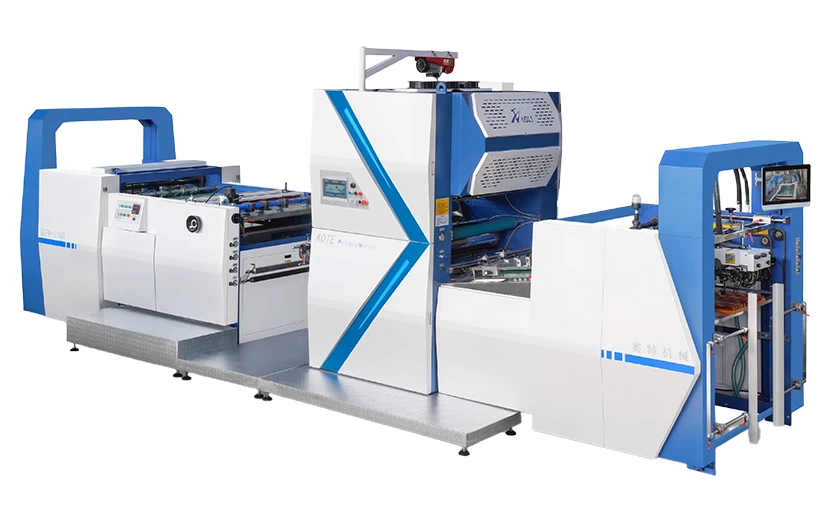
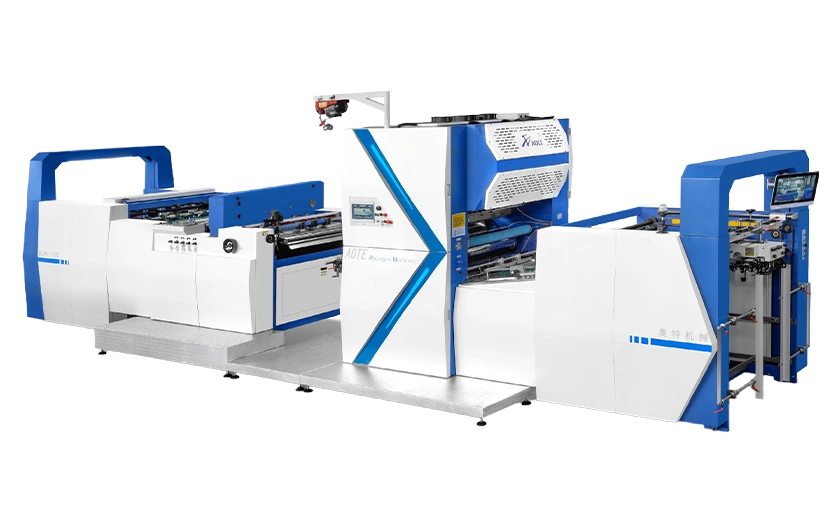
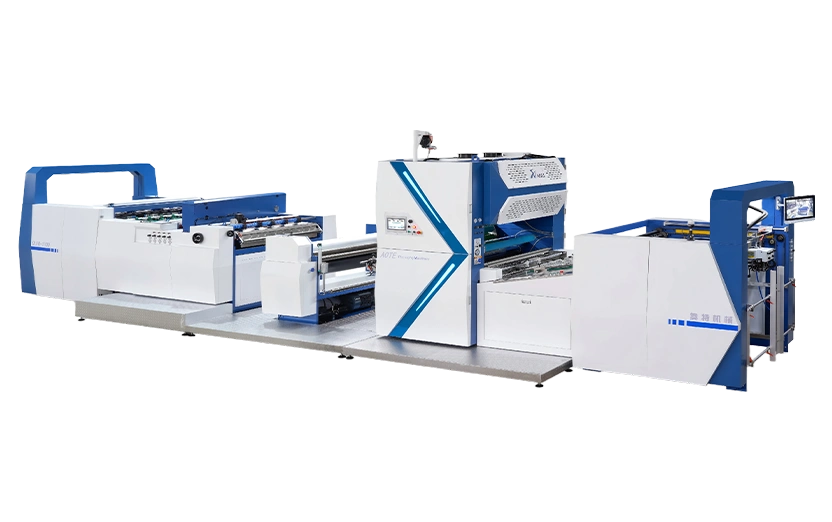
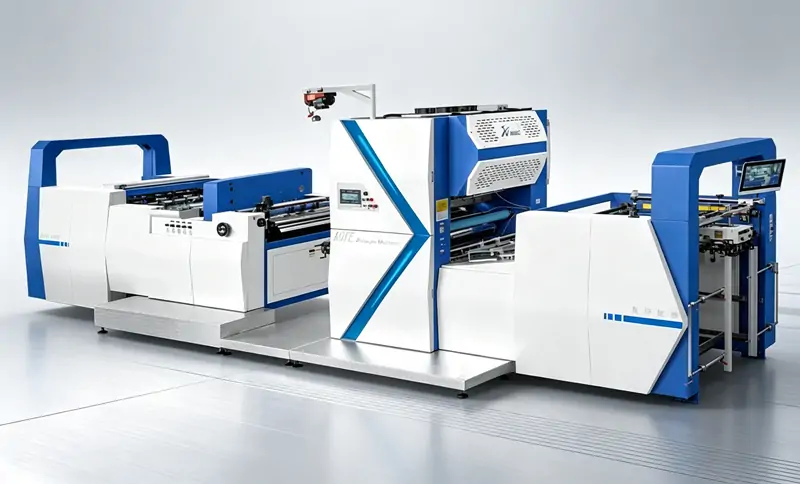
A laminating machine is a piece of printing and packaging equipment that bonds a plastic film layer onto paper, cardboard, or other substrate materials. The purpose is to enhance the printed material's durability, water resistance, appearance, and overall shelf appeal. From book covers and food packaging to luxury gift boxes and product labels, laminated products are an integral part of daily life.
In simple terms, a laminating machine takes a printed sheet and applies a thin protective film over it. The film bonds to the paper through heat, pressure, or adhesive—depending on the machine type—creating a single, unified sheet that combines the print quality of paper with the protective properties of plastic film.
The Purpose of Lamination: Why Laminating Machines Exist
Before understanding how a laminating machine works, it helps to understand why lamination is needed in the first place.
Printed materials face multiple threats during their lifecycle:
- Moisture damage – Paper absorbs moisture, causing warping, ink bleeding, and structural weakness.
- Scuffing and abrasion – Handling, shipping, and shelving cause surface wear.
- UV exposure – Sunlight fades inks and degrades paper quality.
- Physical damage – Folding, bending, and stacking create creases and tears.
Lamination addresses all these issues by creating a protective barrier. The plastic film shields the printed surface from moisture, resists scuffing, blocks UV radiation, and adds structural strength that prevents tearing.
Beyond protection, lamination also enhances appearance:
- Gloss finish – Adds visual impact and colour depth.
- Matte finish – Creates a sophisticated, non-reflective surface.
- Soft-touch finish – Adds a premium tactile feel.
Laminated products command higher perceived value and can often justify premium pricing in the marketplace.
How Does a Laminating Machine Work? The Basic Working Principle
While different types of laminating machines operate through distinct mechanisms, the fundamental principle remains consistent across all models. A laminating machine bonds a film to a substrate using a combination of three elements: heat, pressure, and/or adhesive.
The simplest way to understand the process is: film + substrate + adhesive (or heat) + pressure = laminated product.
The Core Lamination Process
Step 1: Film Preparation
The laminating film is loaded into the machine. This film may be pre-coated with adhesive (thermal film) or require adhesive application during the process (water-based or oil-based films).
Step 2: Sheet Feeding
Paper or cardboard sheets are fed into the machine. In semi-automatic machines, an operator places each sheet manually. In automatic machines, sheets are fed automatically from a stack.
Step 3: Adhesive Application (for water-based/oil-based systems)
For machines using water-based or oil-based adhesives, a glue coating unit applies adhesive to either the film or the paper surface. This step is skipped in thermal laminating machines, where the adhesive is already present on the film.
Step 4: Lamination (Bonding)
The film and paper are brought together under a roller system. Heat activates the adhesive in thermal systems, while pressure alone bonds the layers in cold lamination processes. The combination of heat and pressure ensures complete contact between the film and substrate, eliminating air bubbles and achieving a strong, lasting bond.
Step 5: Cutting/Slitting
After lamination, the continuous film between sheets is cut. Different cutting systems are used depending on the film type:
- Disc cutter – For BOPP and OPP films
- Chain knife or hot knife – For PET, PVC, metalized films, and specialty materials
Step 6: Stacking
The finished, laminated sheets are collected and stacked automatically or manually, ready for the next production stage.
The Critical Role of Heat and Pressure
Temperature and pressure are the two most critical variables in the laminating process:
Heat – Heat activates the adhesive in thermal film. It also softens the film slightly, allowing it to conform to the paper surface for complete contact. Different films require different temperature ranges: BOPP typically laminates at 80–100°C, while PET requires 100–120°C due to its higher melting point and lower thermal conductivity.
Pressure – Pressure ensures that the film makes complete contact with the substrate. Even pressure across the entire sheet eliminates air bubbles and prevents edge delamination. Insufficient pressure results in poor adhesion, while excessive pressure can damage the film or substrate.
AOLI's laminating machines feature electromagnetic heating technology with ±1°C temperature control accuracy, ensuring consistent results across every sheet.
Core Components of a Laminating Machine
Every laminating machine consists of several essential components that work together to produce a finished laminated product.
1. Feeding System
The feeding system delivers sheets into the lamination section. In automatic machines, this includes a feeder stack that holds multiple sheets and feeds them one by one into the machine. In semi-automatic machines, the operator manually places each sheet.
Key functions:
- Sheet separation (preventing double-feeding)
- Sheet alignment (ensuring correct position before lamination)
- Speed control (matching sheet feed to lamination speed)
2. Laminating Section
The laminating section is where the film and paper are bonded together. This section typically includes:
Heated Rollers – For thermal lamination, these rollers apply heat to activate the adhesive while also applying pressure to bond the layers. AOLI's electromagnetic heating system provides rapid heat-up and precise temperature control.
Pressure Rollers – These apply even pressure across the entire sheet, ensuring complete contact between the film and paper.
Temperature Control System – Precise temperature regulation is essential for consistent quality. Most modern machines use PLC control with temperature sensors that continuously monitor and adjust roller temperature.
3. Film Unwinding System
The film unwinding system holds the roll of laminating film and feeds it into the laminating section at a controlled speed. Key features include:
- Tension control – Prevents film wrinkling or stretching
- Edge guidance – Maintains film alignment with the paper
- Splicing capability – Allows film roll changes without stopping production (in advanced machines)
4. Cutting System
After lamination, the film must be cut between sheets. Different cutting systems are used:
- Disc cutter – A mechanical rotary disc that cuts BOPP and OPP films cleanly
- Chain knife or hot knife – For PET, PVC, metalized films, and specialty materials
5. Stacking System
The stacking system collects finished laminated sheets. In automatic machines, this includes an automatic stacker that organizes sheets neatly for collection.
Key features:
- Non-stop stacking – Allows sheet removal without stopping production
- Stack alignment – Ensures sheets are stacked squarely
- Sheet counting – Provides accurate production counts
6. Control System
Modern laminating machines are controlled by PLC (Programmable Logic Controller) systems with touchscreen interfaces. The control system manages:
- Temperature settings and monitoring
- Pressure adjustments
- Speed control
- Job parameter storage and recall
- Fault detection and diagnostics
AOLI's laminating machines feature one-touch start-up and automatic plate change in just 3 minutes, significantly reducing setup time between jobs.
Different Types of Laminating Machines
While the basic working principle is similar across all laminating machines, different types are designed for specific applications.
Vertical Laminating Machine
The vertical laminating machine is the most versatile configuration, compatible with water-based, oil-based, and thermal film processes. It is available in both automatic and semi-automatic models for commercial printing and packaging applications.
Thermal (Pre-Coated) Laminating Machines
These machines use film that already has adhesive applied. The machine only needs to apply heat and pressure to bond the film. Thermal lamination requires no glue mixing, cleaning, or drying time, making it cleaner and simpler to operate.
Water-Based Cold Laminating Machines
These machines use water-based adhesive that does not require heating during the lamination process. Cold lamination saves energy and prevents heat-related issues with sensitive materials.
Roll-to-Roll Laminating Machines
These machines process continuous rolls of material rather than individual sheets. They are designed for high-volume, uninterrupted production.
For a detailed comparison of each laminating machine type and its applications, visit the products overview page.
Frequently Asked Questions
What materials can be laminated?
Most laminating machines handle paper, cardboard, and board substrates from 100–500 gsm. Common materials include coated paper, uncoated paper, corrugated board, and specialty board.
What film types are used in lamination?
Common films include BOPP, PET, PVC, OPP, and metalized films. Each type has different temperature requirements and provides different aesthetic and protective properties.
What is the difference between thermal and cold lamination?
Thermal lamination uses pre-coated film activated by heat and requires no adhesive handling. Cold lamination uses water-based adhesive at room temperature and saves energy but requires glue mixing and cleaning.
What is electromagnetic heating in laminating machines?
Electromagnetic heating generates heat directly inside the roller through induction, reaching operating temperature quickly with precise ±1°C accuracy, resulting in significant energy savings compared to traditional oil heating.
How do I maintain a laminating machine?
Regular maintenance includes roller cleaning, temperature system inspection, pressure verification, and lubrication of moving parts. AOLI provides comprehensive service support for all its laminating machines.
Conclusion
A laminating machine is an essential piece of equipment for any printing or packaging operation. By bonding a protective plastic film to printed materials, it enhances durability, appearance, and value. Understanding the basic definition, working principle, and core components helps buyers make informed decisions about which machine type best suits their production needs.
For a comprehensive guide on selecting the right laminating machine for your operation, refer to the complete laminating machine guide. If you have specific application requirements, contact the AOLI team for personalized advice.
Disclaimer: Temperature values and performance specifications mentioned in this article are general industry reference ranges. Actual optimal settings depend on specific film types, substrate materials, and operating conditions. Users should verify parameters with their equipment supplier.

 Aug 26,2026