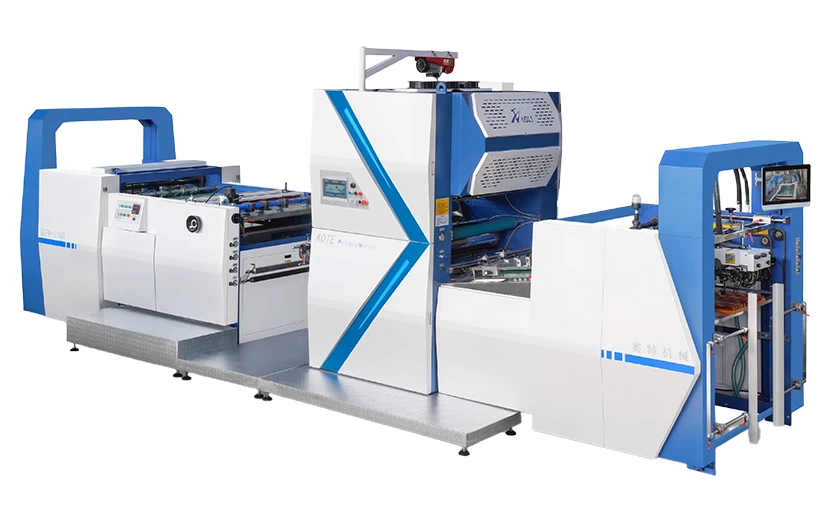
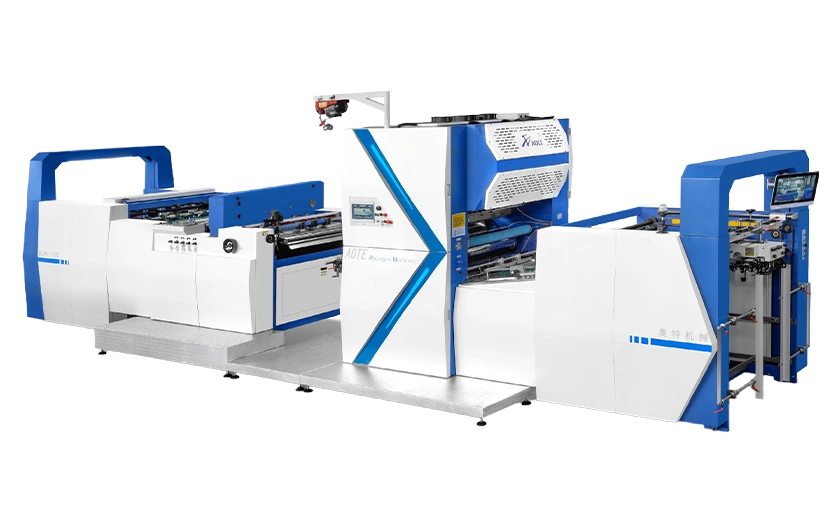
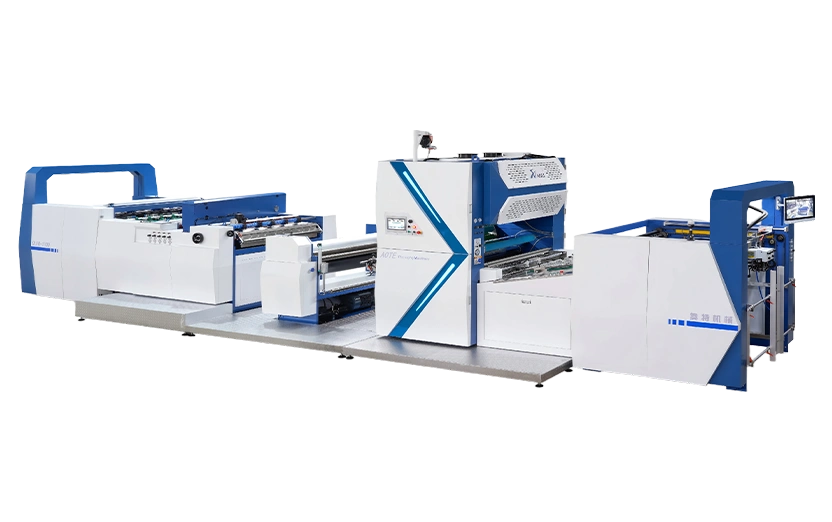
Selecting laminating equipment for a printing or packaging operation involves weighing several factors that directly affect output quality and daily operating costs. A waterbased cold laminating machine uses water-based adhesive applied at room temperature to bond BOPP, PET, or metallized film to printed paper sheets. Because no heating is required, energy consumption is lower than thermal lamination, and the process avoids the risk of heat-induced paper deformation that can occur with hot-roll systems. Understanding which specifications matter for a given production profile prevents overspending on unnecessary capacity or underspending on features that affect throughput and quality.
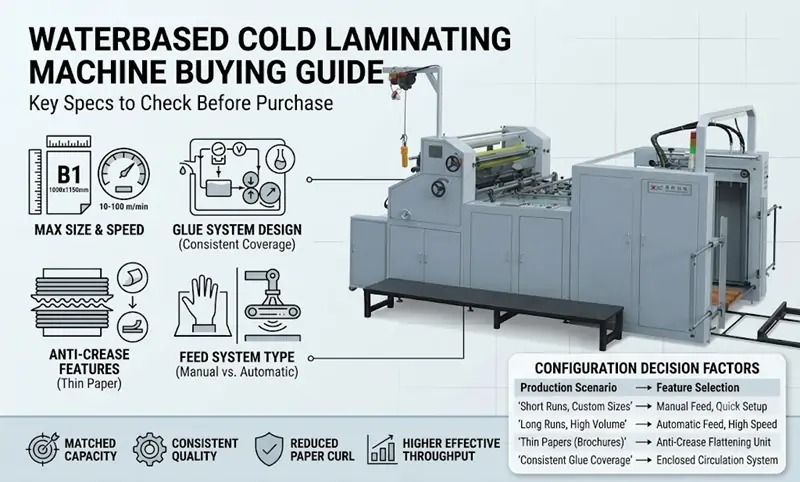
Maximum Paper Size and Speed: Defining Your Production Envelope
The two numbers that most immediately define whether a laminator fits a production line are the maximum sheet size and the rated operating speed.
Maximum paper size. Common full-size formats include 1000×1150mm, which accommodates standard B1 sheets with room for trimming. Some models handle slightly larger formats. The key consideration is whether the machine can process the largest sheet the shop regularly produces without requiring operators to split jobs into smaller formats. A machine rated for a maximum width that exactly matches the largest sheet leaves no margin for sheet skew on the feed table, which can cause edge wrinkles during lamination.
Operating speed. Rated speeds for automatic water-based cold laminators typically range from 10 to 100 m/min. The actual sustained speed depends on paper thickness, glue application rate, and operator skill in keeping the feed table loaded. A machine rated at 80 m/min may sustain 60–70 m/min in continuous production when accounting for sheet changeover and minor adjustments. Shops running multiple shifts should factor in a realistic duty cycle rather than assuming the rated maximum represents continuous throughput.
Matching these two parameters to actual production volumes ensures the equipment operates within its efficient range. A cold laminating machine with automated sheet feeding and programmable controls can sustain higher effective throughput by reducing manual handling time between sheets.
Glue System Design: How Adhesive Application Affects Quality and Cleanup
The glue application system is the heart of a water-based laminator. Its design determines adhesive coverage uniformity, drying behavior, and the time required for end-of-shift cleanup.
Roller coating systems. Most water-based cold laminators use a roller coater: a gravure or smooth metering roller transfers adhesive from a reservoir to an application roller, which deposits a controlled film onto the paper surface. The gap between the metering and application rollers sets the glue film thickness. This gap must be adjustable to accommodate different paper absorbency rates—porous uncoated papers require a slightly heavier adhesive film than dense coated stocks.
Glue viscosity control. Water-based adhesives change viscosity with ambient temperature and as water evaporates from the open reservoir during a shift. Machines with enclosed glue circulation systems maintain more consistent viscosity by limiting evaporation. Open-tray systems require periodic viscosity checks and addition of water or fresh adhesive to maintain the target application rate. Inconsistent viscosity leads to uneven glue coverage, which shows up as patchy bonding or visible glue lines on the finished sheet.
Cleanup access. At the end of each shift, the glue system must be cleaned to prevent adhesive from drying on the rollers and in the lines. Machines designed with quick-release roller assemblies and accessible drain points reduce cleanup time significantly. For shops running multiple short-run jobs, fast changeover and cleanup directly affect the number of billable production hours per shift.
Drying section design. After the film is applied, the laminated sheet passes through a drying section where water evaporates from the adhesive. The drying method—ambient air, forced-air fans, or infrared heating elements—affects how quickly the sheet can be stacked or sent to the next process. Forced-air drying speeds production but requires adequate ventilation in the work area to carry away moisture-laden air.
Anti-Crease Features: Handling Thin Paper Without Wrinkling
One of the most common complaints with cold lamination is paper curling or creasing, particularly with lightweight stocks below 150 gsm. The moisture in the water-based adhesive causes the paper fibers to swell slightly on the coated side. As the moisture evaporates, the paper contracts unevenly, creating a curl toward the laminated side.
Thin paper flattening mechanisms. Some laminators incorporate a dedicated flattening unit between the laminating rollers and the delivery section. This may consist of corrugated guide plates, breaker bars, or additional roller sets that apply gentle counter-pressure to offset the curling tendency. For shops that regularly laminate thin papers—magazine covers, brochure pages, or lightweight packaging—this feature is not optional; without it, curled sheets cause stacking problems and may require additional pressing before downstream converting operations.
Delivery section design. The delivery section should support the laminated sheet evenly across its full width as it exits the machine. Narrow delivery belts that contact only the center of the sheet can create uneven support that worsens curling, especially on wide-format sheets. Machines with full-width belt conveyors or closely spaced roller arrays provide more uniform support.
Manual vs. Automatic: Matching the Feed System to the Production Volume
Water-based cold laminators are available in both manual and automatic configurations, and the choice comes down to labor cost, production volume, and job variety.
Manual feed systems. The operator places each sheet individually onto the feed table. Manual machines are simpler mechanically, have a lower purchase price, and are easier to maintain. They are well-suited to shops running smaller batches, frequent job changes, or a wide variety of sheet sizes—situations where an automatic feeder would require constant reconfiguration.
Automatic feed systems. A vacuum or friction feeder picks sheets from a stack and advances them into the glue unit without operator intervention. Once loaded and calibrated, an automatic machine can run continuously with only occasional monitoring. The throughput advantage is significant for long-run production: an automatic line can sustain 60–80 m/min across an entire shift, while a manual machine's throughput depends on the operator's speed and stamina.
The trade-off is setup time. Automatic feeders require precise adjustment for each sheet size and paper type. For shops that change sheet sizes several times per shift, the setup overhead may reduce the throughput advantage. When evaluating equipment, shops should consider how sheet-fed laminating equipment fits their specific production mix and labor cost structure.
From Specifications to Production Fit
Selecting the right laminating equipment is not about finding the machine with the highest maximum speed or the largest sheet format. It is about matching the machine's design characteristics—glue system type, anti-crease features, feed configuration—to the actual mix of paper stocks, film types, and production volumes the shop handles daily. A clear assessment of these four specification areas before purchase reduces the risk of specifying a machine that works perfectly on the demonstration floor but struggles under real production conditions.

 Jul 21,2026